


The Struggle for Voting Rights is Far from Over
By Curtis Keyes, Jr.
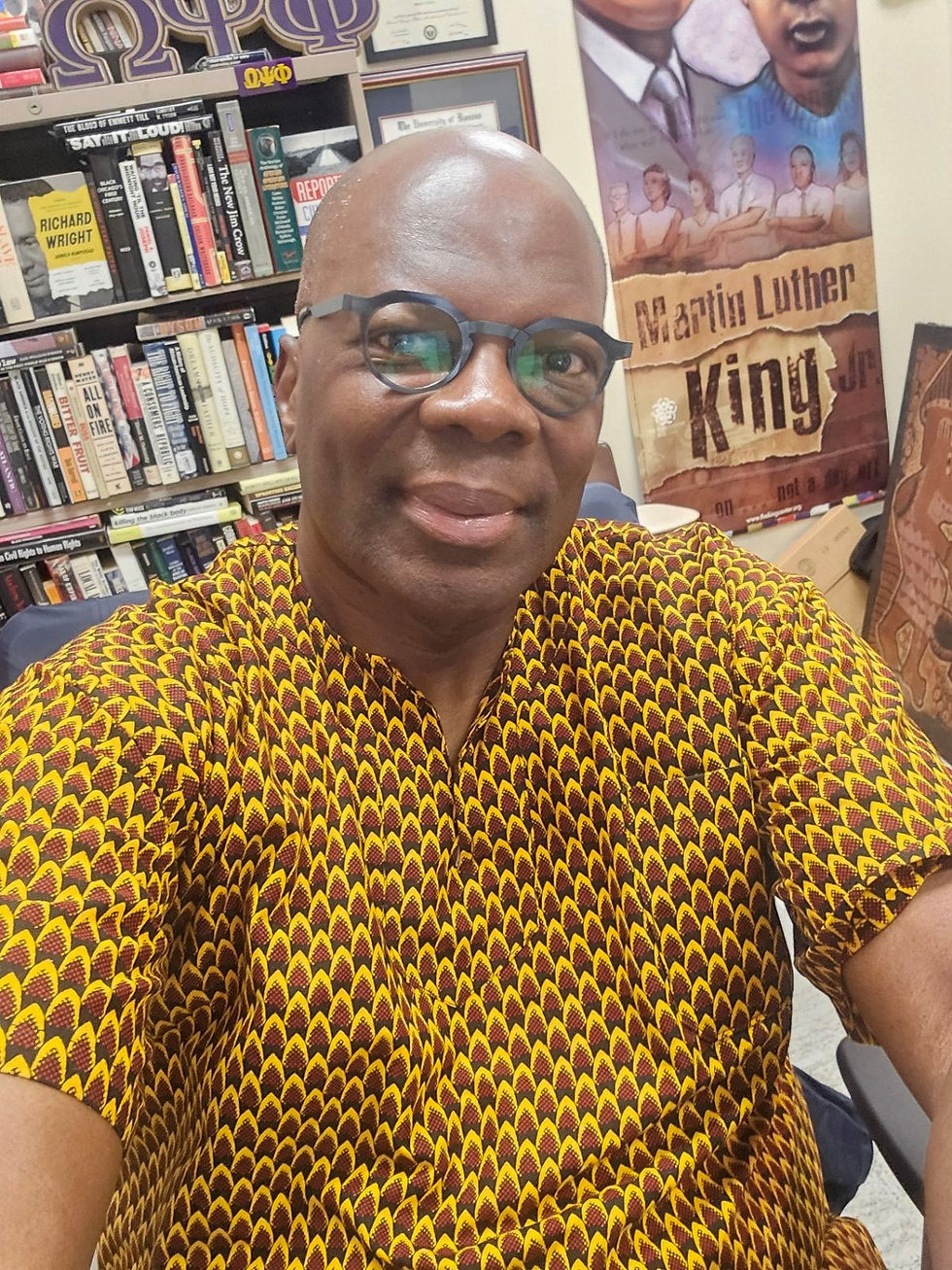
Chair of Local 1600 Civil Rights Committee
On August 6, 1965, President Lyndon B. Johnson signed the Voting Rights Act (VRA) into law, marking a significant piece of federal legislation. Often hailed as the defining legislative “crown jewel” of the Civil Rights Movement, the VRA abolished state and legal Jim Crow laws that had barred African Americans from voting. However, in the past 15 years, the conservative majority in the Supreme Court has significantly weakened the VRA’s fundamental provisions through both judicial decisions and legislative changes. For decades, Section 5 of the VRA has served as a sentinel, mandating states with histories of racial discrimination to obtain federal “preclearance” before implementing any changes to voting procedures.
Yet, in 2013, the Supreme Court’s decision in Shelby County v. Holder effectively dismantled the “preclearance” requirement, with Chief Justice John Roberts controversially claiming that “things have changed dramatically” in the South concerning racial disparities in voter registration and turnout. Roberts’ deep-seated bias and longstanding animus to the VRA and the broader fight against racial discrimination undermine decades of efforts by communities of color right to secure fair representation in congressional districts. The legacies of civil rights martyrs of the movement, including Rev. George Washington Lee, Herbert Lee, Medgar Evers, James Chaney, Michael Schwerner, Andrew Goodman, Rev. James Reeb, Viola Liuzzo, Jonathan Daniels and Rev. Martin Luther King, Jr. and activists, from John Lewis, Robert Moses, Fannie Lou Hamer, Amelia Boynton Robinson, Ella Baker, Diane Nash, Kwame Ture, and Gloria Richardson, reminds us that the struggle for voting rights is far from over in the United States.
Following Shelby County v. Holder (2013) decision, states quickly enacted restrictive photo ID laws, purged voter rolls, and closed polling locations in predominantly African American communities, thus making it harder for people of color to vote. Although this era may differ from the “fire hoses” and “police dogs” disenfranchisement of the 1960s, it presents administrative hurdles—subtle, yet impactful in marginalizing Black political power and influence in public and social policy. Furthermore, on April 29, 2026, the VRA suffered another critical blow due to the Supreme Court’s ruling in Louisiana v. Callais. The 6-3 decision effectively nullified Section 2 of the VRA, the last remaining tool to combat racial gerrymandering and vote dilution in the United States. In dissent, Justice Elena Kagan argued the conservative majority decision rendered Section 2 of the VRA “all but a dead letter” by making it harder to challenge discriminatory congressional maps.
With the evisceration of Section 2, white Republican-controlled Southern state legislatures immediately began redrawing congressional districts and eliminating majority African American districts that typically supported Democrats. This is a clear case of anti-Black political dilution disguised as a partisan strategy. Up to 12 majority African American congressional seats are at risk of elimination from the electoral process.
What steps should the Local 1600 take?
At this pivotal moment, we must mobilize our collective outrage and harness it to increase voter turnout for the midterm elections in November 2026. We should cast our votes for candidates who support the John Lewis Voting Rights Advancement Act, which aims to establish a new federal “preclearance” that will withstand the one the Supreme Court invalidated in 2013. Additionally, we should support candidates who endorse the Freedom to Vote Act, which seeks to prohibit partisan gerrymandering. Civil Rights organizations are focusing on this because it tackles the partisan shield that states are using to dilute majority African American districts. Furthermore, advocacy groups are urging voters to demand a litmus test from candidates in the 2026 Congress to publicly commit to prioritizing these two bills within the first 100 days of the next Congress session. We should insist that state legislators introduce a state VRA to create a local safety net beyond the Supreme Court’s jurisdiction. Stay woke. The voting rights struggle is not over.


Comments